1. INTRODUCTION (Tổng quan nhiệm vụ & Component ID)

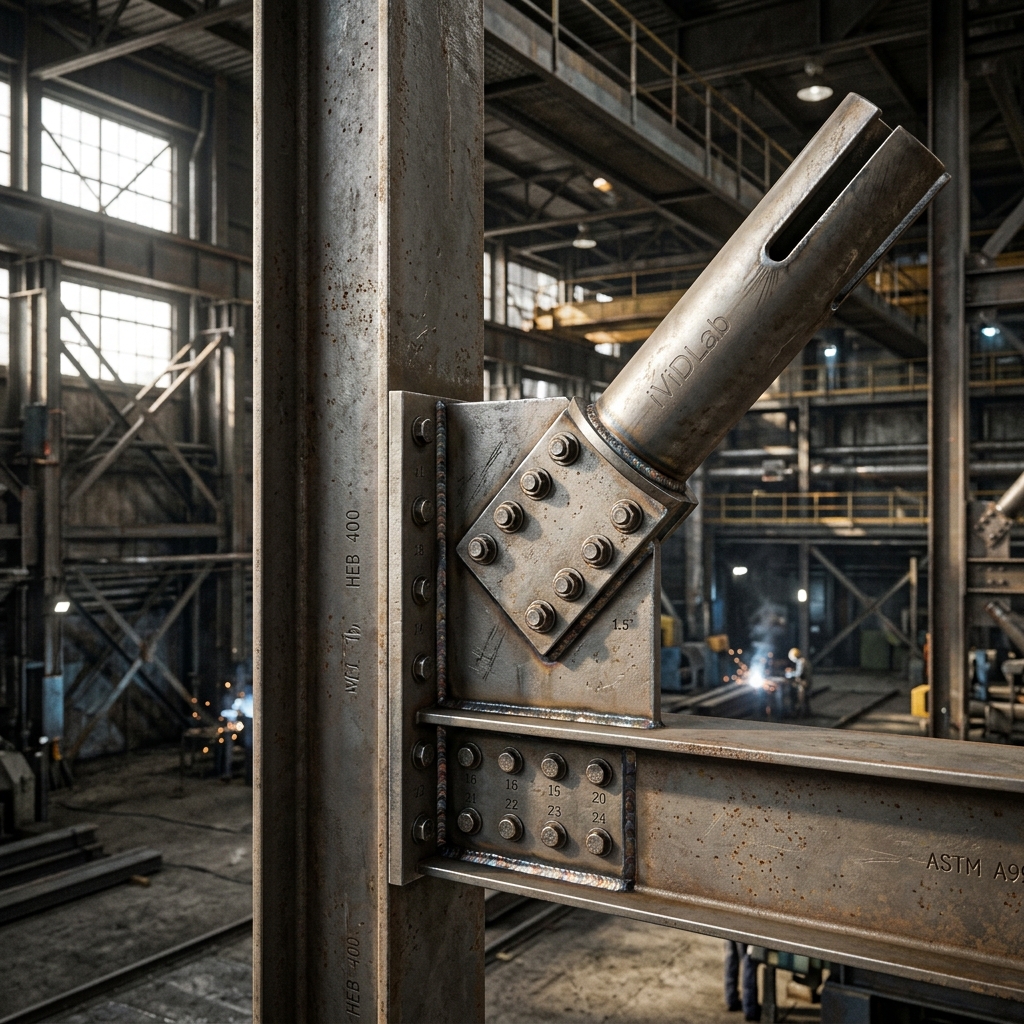
Khi thiết kế hệ giằng chịu tải trọng ngang bằng thép ống tròn (CHS) hoặc thép hộp rỗng (RHS/SHS), thách thức lớn nhất là chi tiết hóa liên kết bắt bu lông ở hai đầu thanh giằng. Kỹ thuật gia công thực tế thường sử dụng 2 phương pháp: ép dẹt đầu ống (Crushed/Flattened tube) hoặc xẻ rãnh chèn bản mã (Gusset tube/Slotted tube).

Tài liệu Tekla Structures giới thiệu nhóm công cụ Bracing Connection Elements mạnh mẽ, cho phép mô hình hóa tự động các chi tiết này ở mức độ LOD400. Các component chủ lực bao gồm:

  • Crushed tube in points (S46) & Crushed tube in bolts (S48): Ép dẹt đầu ống và bắt bu lông trực tiếp.
  • Gusset tube in points (S47) & Gusset tube in bolts (S49): Xẻ rãnh dọc ống, chèn bản mã (gusset) và sử dụng thép T (Tees) hàn kín hai đầu.

2. USE CASES TABLE (Các trường hợp thực tế)

Component ID Mô tả (Description) Ứng dụng thực tế
S46 Crushed tube between two points Giằng thép ống tròn chịu lực vừa/nhỏ, ưu tiên tính thẩm mỹ kiến trúc (Architectural Expose).
S47 Tube brace between two points, two tees at each end Giằng ống hạng nặng, xẻ rãnh bản mã và bịt kín đầu (Sealed tube) chống ăn mòn.
S48 / S49 Crushed/Gusset tube between points or bolts Gắn giằng trực tiếp vào các nhóm bu lông đã có sẵn từ liên kết bản mã góc (Corner Gusset).

3. SELECTION ORDER (Quy trình thao tác)

Tùy thuộc vào việc bạn sử dụng component "in points" hay "in bolts", quy trình click chuột sẽ khác nhau:

Đối với S46 / S47 (In points):

  1. Pick điểm bắt đầu (Start point) của thanh giằng.
  2. Pick điểm kết thúc (End point) của thanh giằng.
  3. Thanh giằng và liên kết đầu ống được tự động sinh ra sau click thứ 2.

Đối với S48 / S49 (In bolts):

  1. Pick vào nhóm bu lông (Bolt group) thứ nhất.
  2. Pick vào nhóm bu lông thứ hai.
  3. Hoặc click chuột giữa (Middle mouse) nếu chỉ muốn gán một đầu.

4. DEEP DIVE SETTINGS (Chi tiết thông số)

Khác với các liên kết thông thường, nhóm Bracing Elements không cho phép sửa đổi các part riêng lẻ (individual objects) bằng tay sau khi sinh ra từ component. Mọi điều chỉnh phải thực hiện thông qua bảng thuộc tính (Properties dialog).

Tab Parameters (Thông số dập đầu ống)

  • Corner dimension: Xác định bán kính vuốt khi ống từ hình tròn chuyển sang trạng thái bị ép dẹt (đối với S46).
  • Tube end length: Chiều dài của phần dẹt (flat area), phải đủ lớn để bố trí bu lông và đảm bảo khoảng cách mép (Edge distance).

Tab Bolts (Bu lông)

Đặc biệt lưu ý thiết lập Thread in mat (Vị trí ren). Khi kết nối giằng chịu lực lớn, nên cài đặt ren nằm ngoài mặt phẳng cắt (Thread out of shear plane) để tăng cường khả năng chịu cắt của bu lông.

5. DETAIL ERRECTION TIPS (Mẹo thi công & lắp dựng)

Mẹo lắp dựng (Erection Tip): Khi sử dụng Gusset tube (S47), ống sẽ bị hàn kín (sealed). Điều này cực kỳ quan trọng đối với các dự án mạ kẽm nhúng nóng (Hot-Dip Galvanizing). Nếu bạn bịt kín hai đầu ống, bạn PHẢI bổ sung lỗ thoát khí/khoét lỗ (Vent/Drain holes) ở tab Flow holes hoặc bằng tay, nếu không ống sẽ bị nổ khi nhúng vào bể kẽm nóng 450 độ C!

6. Căn cứ Thiết kế & Tiêu chuẩn (Design Standards Reference)

  • AISC 360-16 (Chapter K): Tiêu chuẩn cốt lõi thiết kế liên kết cho ống thép hình tròn và hộp rỗng (HSS and Box Member Connections), bao gồm cả ống khuyết đầu (slotted tubes).
  • EN 1090-2: Yêu cầu về chất lượng và độ kín của đường hàn Seal plates, quy định bắt buộc phải có lỗ thoát khí khi mạ kẽm ống kín.

1. INTRODUCTION (Task Overview & Component ID)

When designing transverse bracing systems using Circular Hollow Sections (CHS) or Rectangular/Square Hollow Sections (RHS/SHS), the biggest detailing challenge lies at the brace ends. The two most common fabrication techniques are Crushed/Flattened tube and Gusset/Slotted tube.

Tekla Structures provides a powerful suite of Bracing Connection Elements to automate these details to LOD400. The core components are:

  • Crushed tube in points (S46) & Crushed tube in bolts (S48): Flattens the tube ends and applies bolting directly.
  • Gusset tube in points (S47) & Gusset tube in bolts (S49): Slots the tube longitudinally to insert a gusset plate, often sealed with structural Tees.

2. USE CASES TABLE

Component ID Description Practical Application
S46 Crushed tube between two points Light/medium load bracing, highly favored in Architectural Exposed Structural Steel (AESS).
S47 Tube brace between two points, two tees at each end Heavy-duty bracing. Slots the gusset and fully seals the tube to prevent internal corrosion.
S48 / S49 Crushed/Gusset tube in bolts Attach the brace directly to existing bolt groups created by corner gusset macros.

3. SELECTION ORDER

Depending on whether you use the "in points" or "in bolts" variant, the input sequence differs:

For S46 / S47 (In points):

  1. Pick the start point for the tube.
  2. Pick the end point for the tube.
  3. The tube is created automatically when you pick the end point.

For S48 / S49 (In bolts):

  1. Pick the first bolt group.
  2. Pick the second bolt group.
  3. Or click the middle mouse button if connecting only one end.

4. DEEP DIVE SETTINGS

Unlike standard connections, the Bracing Elements components do not allow you to modify the individual objects they create manually. All adjustments MUST be routed through the macro dialog.

Parameters Tab

  • Corner dimension: Defines the transition radius where the round tube morphs into the flat crushed state (for S46).
  • Tube end length: The length of the flat portion. It must be sufficiently long to accommodate the bolt group and maintain proper edge distances.

Bolts Tab

Pay close attention to the Thread in mat setting. For heavy tension/compression braces, ensure the threads are excluded from the shear plane to maximize the bolt's shear capacity.

5. DETAIL ERRECTION TIPS

Erection & Fabrication Note: When using Gusset tube (S47), the tube ends are completely sealed. This is critical for Hot-Dip Galvanizing (HDG) projects. If the tube is sealed, you MUST manually or parametrically add vent and drain holes. Failure to do so will cause the trapped air inside the tube to violently expand and potentially rupture the tube when submerged in the 450°C molten zinc bath!

6. Design Standards Reference

  • AISC 360-16 (Chapter K): Core design standards for Hollow Structural Sections (HSS) and Box Member Connections, covering slotted tube and gusset plate interactions.
  • EN 1090-2: Quality requirements for sealing welds and the mandatory provision of vent holes when hot-dip galvanizing sealed tubular structures.